
Scarring After Cancer: Why Scar Therapy Matters and How We Can Help
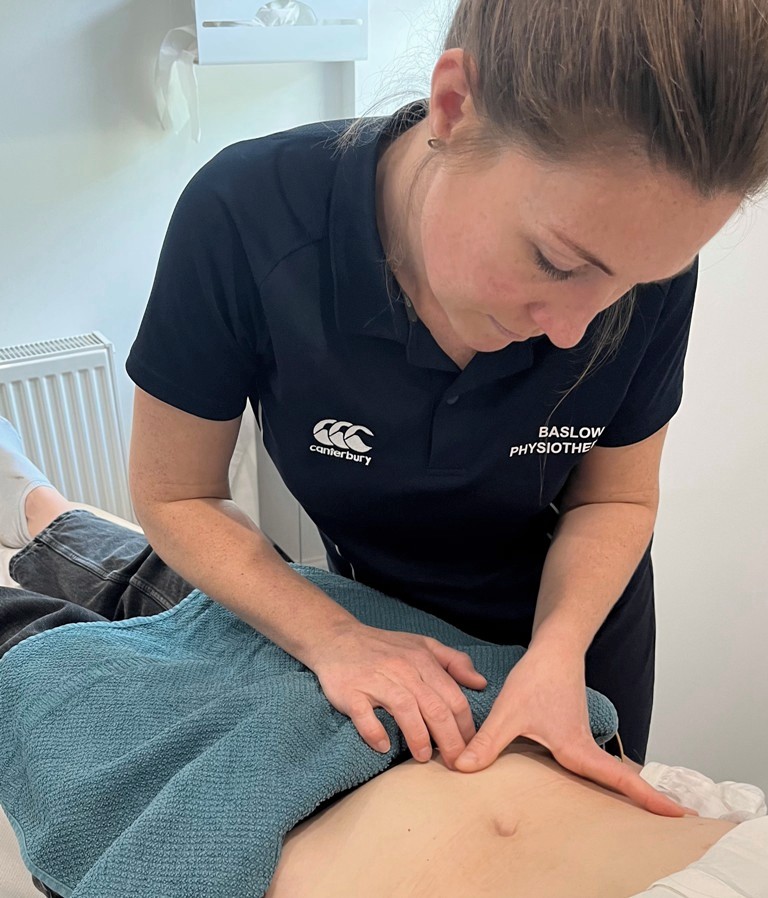
Scar therapy after cancer related surgery
A cancer diagnosis changes so much — and for many people, one of the lasting physical reminders is a scar. Whether it's from breast surgery, a mastectomy, lymph node removal, reconstruction, or surgery on the head, neck, abdomen or elsewhere, scar tissue is a normal and expected part of healing. But scars don't always heal in a way that's comfortable, functional, or easy to live with.
At Baslow Physiotherapy, we see people every week who are dealing with tight, painful, or restrictive scarring long after their cancer treatment has finished. The good news is that scar tissue can usually be improved with the right care — and the earlier it's addressed, the better the results tend to be.
This post covers why scar therapy matters, what it actually involves, when it's time to seek help, and where to find further support.
Why scar therapy matters
Scar tissue after cancer surgery or radiotherapy isn't just a cosmetic issue. It can genuinely affect how your body moves and feels.
It can restrict movement. As a scar heals, your body lays down new collagen fibres. These often form in a disorganised, tight pattern — this happens especially after radiotherapy. When that happens, the surrounding tissue loses its natural stretch. This shows up most often around joints like the shoulder, after breast or axillary surgery. Tightness there can limit reaching, lifting, or getting dressed.
It's linked to cording and fibrosis. Many people who've had lymph nodes removed from the armpit develop cording (also called axillary web syndrome). This causes tight, rope-like bands that run from the armpit down the arm. Radiotherapy can also cause radiation fibrosis. Here, treated tissue gradually stiffens and thickens, sometimes months or years after treatment ends. We manage both conditions best early, alongside good movement work and lymphoedema care where needed.
It can cause pain or numbness. Surgery often affects nerve endings. This can leave your scar oversensitive, numb, or prone to a burning or pulling sensation, especially when you move.
It affects how you feel in your body. Scars from cancer surgery often carry real emotional weight. Scar therapy can help here too. Simply learning to touch and massage the area again can help you feel more confident and more in control of your recovery, alongside the physical benefits.
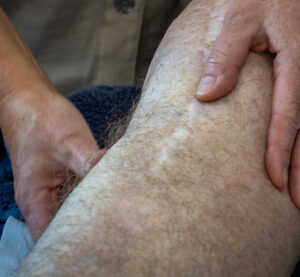
What scar therapy actually involves
Scar therapy isn't a single treatment. It usually combines hands-on techniques with a home programme, tailored to how your scar presents.
It starts with an assessment. We check how your scar is healing and how well it moves. We look for whether it's stuck to the tissue beneath it, and whether there's any cording, swelling, numbness or pain. We don't normally start hands-on scar work until your wound fully closes — usually six to eight weeks after surgery, and only once your surgical team gives the go-ahead.
We use manual scar massage and mobilisation. Gentle, targeted techniques release the scar from the tissue underneath. This improves its ability to glide and stretch, and reduces adhesions.
We add stretching and movement work. Treatment usually includes graded stretching and exercise alongside direct scar work. This helps the rib cage, diaphragm and surrounding muscles, which can also stiffen after chest, breast or underarm surgery.
Breathing and diaphragm work helps too. For scars near the chest or ribs, deep diaphragmatic breathing supports lymphatic flow and reduces stiffness.
You'll also get a home programme. Consistency matters more than intensity here. We'll show you how to massage the scar yourself, plus guidance on moisturising, silicone gels or sheets, and sun protection.
We work alongside your other treatments too. For some scars, your consultant may consider steroid injections, laser therapy, or scar revision surgery. We're always happy to liaise with your surgical or oncology team.
When to seek help
Don't wait for things to become severe before getting your scar assessed. Get in touch if you notice:
- Tightness, pulling, or restricted movement in the area, especially the shoulder, chest or neck
- A cord-like band under the skin, particularly running down the inner arm after underarm surgery
- Ongoing pain, burning, numbness, or oversensitivity around the scar
- A scar that feels increasingly thick, raised, or stuck down as it matures
- Any new swelling in the arm, hand, chest or affected limb, which could indicate lymphoedema

A few things need urgent medical attention rather than physiotherapy. It's always safest to get these checked by your GP or cancer team first:
- Signs of infection — redness, warmth, swelling, discharge, fever
- A wound that has reopened
- Any new lump, or a change you're unsure about — always get this reviewed by your medical team first, simply so it can be properly checked
If you're ever unsure whether something is scar-related, or whether you need a medical opinion first, just ask us. We'd always rather you check than wait and worry.
Other resources for people navigating scar therapy after cancer
Scar therapy is just one part of recovery. There's a lot of excellent support out there too, alongside what we offer in clinic:
- Macmillan Cancer Support — information on scarring, cording and body image after cancer, plus a free helpline (0808 808 00 00): macmillan.org.uk
- Breast Cancer Now — support around breast cancer surgery, lymphoedema and recovery, with specialist nurses (0808 800 6000): breastcancernow.org
- Cancer Research UK — general information on side effects and where to find further support: cancerresearchuk.org
- Lymphoedema Support Network — a national charity for anyone affected by lymphoedema: lymphoedema.org
- MLD UK — a directory of practitioners offering manual lymphatic drainage: mlduk.org.uk
- Maggie's Centres — drop-in support, groups and someone to talk to, at centres across the UK: maggies.org
Getting started
You don't have to just live with a scar that feels tight, painful, or holds you back. Scar therapy can make a genuine difference to your comfort, movement and confidence. Get in touch and we'll be happy to help.
This article is for general information and does not replace individual medical advice. Please speak to your GP, oncology team or a qualified physiotherapist about your own situation.